Make your own free website on Tripod.com


more 1980s
topics


Nostalgia Cafe
main page


Nostalgia Cafe
site map

1980s Consumer Products,
Technology & Advertising


======================================================================
======================================================================


Electronics


The Sony Walkman was introduced in 1979.


Betamax VCR
When videocassette recorders (VCRs) were introduced in the late 1970s, they came in two very different formats: VHS and Betamax. For a while, both machines coexisted side by side. In the early 1980s, VHS became the more popular of the two. Soon, Beta machines were cluttering the shelves of garage sales and resale shops, while VHS machines became the operating standard for the next 20 years.

In 1984, the government ruled that taping programs on your VCR for home viewing wasn't violating any copyright laws. VCR prices fell and sales doubled.


The wireless remote-control was introduced in the mid 1950s. In 1979, it became standard equipment for most TVs. What was once a luxury item was now a neccessity for channel-surfing.


Video cameras and reel-to-reel video recorders were first made available to hobbyists in the 1960s. When the first VCRs came out in 1975, a new line of portable video cameras was introduced to go along with them. At first, these cameras could only be used with a portable VCR slung over the shoulder, which made them very bulky and cumbersome.

In 1982, all functions were combined into a single unit (the camcorder), which could film directly onto a videocassette without the need for a VCR. In the late 1980s, these units were still somewhat big and bulky and were quite expensive.


History Of CD Technology
History Of The Camcorder
Boom-Box Museum
RCA Selectavision VideoDisc
Video Clip: The Home Entertainment Scene, 1981
-----
The compact disc was introduced in 1982. CD players became affordable for most people around 1985, but wouldn't be widely used until the early 1990s. 1,000 album titles were available for purchase in 1983.

Many of us didn't think CDs would catch on. After all, records had been around for such a long time. CDs were more expensive than vinyl, and the new technology would require you to replace your entire album collection. Boy, were we wrong! CD sales surpassed record albums in 1988. By the early 1990s, most record stores were no longer selling records.


There were two videodisc formats available in the 1980s. Pioneer and MCA introduced the laserdisc in 1978, and RCA introduced their Selectavision CED videodisc in 1981. Similar to CDs but much bigger, these formats used 12-inch videodiscs containing up to an hour of material per side. Laserdiscs were scanned by laser, while RCA's discs were made of grooved vinyl and used a stylus.

Laserdiscs were known as Laser Videodiscs and DiscoVision before settling on the LaserVision label in 1983. Although videodiscs were easier to use and contained more features, they soon took a back seat to the new popularity of VCRs. Laserdiscs managed to stay in the game, but RCA's system was discontinued in 1986.


VIDEODISC - BIGGEST THING SINCE TV?
"Before long there will be videodisc 'trips' which, when played on a wide-screen television, simulate travel so convincingly that they could one day replace the automobile. And videodisc players will eventually replace audio turntables, giving your stereo system the capability for pure digital sound."
--1980 newspaper article


In the 1980s, the transistor radios of the past evolved into powerful boom-boxes and ghetto-blasters.


----
In the office, fax machines and personal computers became common.


Electric typewriters and word processors made text editing and document preparation a snap!

===========================================================================
===========================================================================
===========================================================================
===========================================================================


Personal Computers


In the 1970s, personal computers (PCs) were new, expensive and difficult for the average person to use. The 1980s brought the PC to the people.

many models to choose from
Between 1980 and 1983, the computer veterans (Apple, Radio Shack, Commodore and Atari) were joined by several new companies, such as Compaq, Timex-Sinclair, Hewlett-Packard, Casio, Texas Instruments and Osborne.

Several classic computers were introduced during this time:
1980: Commodore VIC-20, the first PC to sell one million units
1980: HP-85, Hewlett-Packard's first PC
1981: Osborne, the first "portable" PC, which weighed 23 pounds
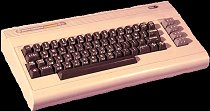
1982: Commodore 64, a very popular model
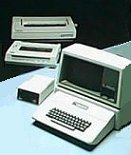
1983: Apple IIe, a model that would remain in production for ten years

early features
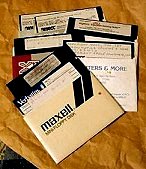
Some PCs had built-in monitors, while others were hooked up to your TV. Data was stored on large floppy disks and documents were printed out on slow, noisy dot-matrix printers.

giants enter the market
In 1981, two technology giants, IBM and Xerox, entered the PC market. IBM introduced the IBM PC (which was a great success) and Xerox introduced the Star (which wasn't).

new ideas from Apple
In 1983, Apple launched the LISA, which was also a failure. It had a cool name, though! :-)

Both the Xerox Star and the Apple LISA had a graphical user interface (GUI), which made them the first user-friendly PCs. Before this, all functions were performed by entering complicated codes and commands. Now they could be performed by choosing selections from a menu or by clicking on icons with a mouse.

-----
In 1985, bringing your computer to college was a new concept. This is my friend Gary writing his paper on my friend Jim's computer, which I believe is an Apple IIe.


Radio Shack TRS-80


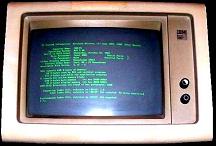
IBM PC, 1981


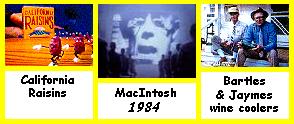
MacIntosh, 1984


The History of Apple Computer
A Brief History Of Computing
Triumph Of The Nerds: PC History
Obsolete Computer Museum
The First IBM PC
Commodore 64 Heaven
The Old Computer
Old Computer Museum
WordStar

the MacIntosh revolution
In 1984, Apple introduced the hugely successful MacIntosh. The Mac incorporated the best features of the LISA, including clickable icons, a mouse and a convenient all-in-one design.

1985
*The larger floppy disks were replaced by 3.5-inch floppies, which actually weren't floppy at all.
*The CD-ROM made its debut.
*Microsoft introduced the first version of their Windows operating system, which gave other PCs the same point-and-click technology as the Mac.
*The Commodore Amiga featured 4,096 colors and stereo sound, and was considered quite advanced for its day.

1987
Microsoft introduced their improved Windows II operating system.

1988
This year saw the debut of the CD-R, a blank recordable CD that could be used to store data and programs.

Mac vs. PC
Computers were now split into two different kinds: those that were Macs and those that weren't. All non-Mac computers were lumped together under the heading of "PC."

===========================================================================
===========================================================================
===========================================================================
===========================================================================


In the 1980s, there were several ways for a computer user to go online....

the internet
In 1982, the term Internet was applied to the global system that linked university, government and commercial computer networks. This system grew from a single network in 1969 to a group of interconnected networks in 1977. By 1983, there were 30 networks and several different levels of connection between them. The Internet offered e-mail, file downloading, databases, mailing lists, chat rooms, instant messaging and games.

bulletin board systems
A bulletin board system (BBS) is a dial-up message board for PC users. The first BBS was invented in 1978 and was run by a computer hobbyist from his personal computer. By the mid 1980s, additional features (e-mail, games, chat rooms, file downloading) were also offered. In 1984, some BBSs began to charge a yearly fee in exchange for more features and adult content. Also in 1984, hundreds of BBSs became linked via the FIDONET network. During the 1980s, the first chat abbreviations and emoticons were used here.

USENET
Launched in 1980, USENET was a dial-up communication system for Unix computer users. Participants shared news articles and discussion boards, which were categorized into newsgroups. One particular newsgroup was dedicated to file downloading. In 1986, it became possible for non-Unix users to post on USENET without special software.

dial-up databases
Some databases and information services could be accessed simply by dialing directly to the host computer. The majority of users were businesses and researchers who accessed credit reports, financial data, technical information and library support services. A smaller number of computer hobbyists accessed news, shopping and general research sites.

online services
PC users had networks of their own in the form of dial-up online services like Compuserve, The Source, Genie, Delphi, UUNET and Prodigy. These services provided members with news, online encyclopedias, games, e-mail, forums and chat rooms on a subscription basis.

worlds apart
Each of the online systems listed above operated independently of the others. Access to the Internet was limited to the few users who were connected to a network, and the other systems were not part of the Internet. There were instances, however, when one system provided access to the others. BBS users could post on USENET in 1985, and some online services and BBSs began to offer Internet access in 1989.

----- Going Online


Apple, 1982


Internet History Timeline 1962-1992
Usenet FAQ
First Use Of The Smiley Face :-)


Commodore 64 keyboard

"cyberspace"
In 1984, novelist William Gibson coined the term cyberspace to describe the new virtual world that computers were creating for us.

domain names
At first, each host on the Internet was accessed by a number (the IP address). By 1984, there were 1,000 hosts, which made this system impractical. The Domain Name System was developed, and this was the origin of .com, .net, .edu and so on. In 1985, Symbolics.com registered the first domain name. At this point, having a dot-com address was still free.

explosive growth
In 1984, less than 2,000 computers had access to the Internet. Between 1985 and 1987, this number increased to 30,000. It jumped again to 160,000 when Internet access was offered to casual computer users in 1989.

internet access for all
In 1987, the UUNET online service provided Unix PC users with access to some Internet features. The Internet was made available to all computer hobbyists in 1989 when The World provided them with the first commercial dial-up Internet access. Some online services and BBSs also offered Internet access in 1989.

a world-wide web
In 1989, Tim Berners-Lee first proposed the idea of a World Wide Web. This feature would operate over the Internet, and would use a universal language (html) and standard software programs (browsers) to provide access to digital documents hosted by special computers (web servers). Rather than link entire computers together, the whole procedure would be simplified because only the documents would be linked. In 1991, this plan became a reality, and the Web that we all know and love was officially here!

===========================================================================
===========================================================================
===========================================================================
===========================================================================


Consumer Products

.....in use during the 1980s


meals
& snacks


Chicken McNuggets (1982)
McRib sandwich
pizza
nachos
Orville Redenbacher popcorn
gyros
Pop Secret popcorn
Le Menu microwave meals
bagged salads (1989)
Stouffer's Lean Cuisine (1981)


candy & desserts
Reese's Pieces
frozen yogurt
Fruit Roll-Ups
Gummi-Bears
Haagen-Dazs Ice Cream
Little Debbie Snack Cakes
Eli's Cheesecake (1980)
Breyer's Ice Cream
Ben & Jerry's Ice Cream


----- cereal
Every toy and cartoon character
had a sugar-sweetened cereal named after it!


Cookie Crisp
E.T. Cereal
Cabbage Patch Kids Cereal
Pac-Man Cereal
Strawberry Shortcake Cereal
Wheaties


Topher's Breakfast Cereal Character Guide
Wheaties


========================================
========================================


typical prices

laserdisc player............................$500-$800
Coke (6-pack, cans).......................$1.99
Hitachi stereo system.....................$229.95
laserdisc movie...............................$25.00
camcorder (1989)............................$1,000
vinyl LP (1981)...............................$7.00
audio CD (1983)..............................$21.50
Atari game system (1983)................$129.00
Atari game cartridge (1983).............$9.99
Commodore VIC-20 PC (1983)........$89.00


========================================
========================================
========================================
========================================

beverages
In the old days, we tolerated diet sodas but we never really enjoyed them. In the 1980s, improved artificial sweeteners like Nutrasweet replaced the bitter taste of Tab with the pleasant taste of Diet Coke and Diet Pepsi.

In the 1980s, you could enjoy your favorite juice drinks on the go, thanks to juice boxes and pouches that you punctured with a plastic straw.


soft drinks, water
Diet Coke (1982)
Jolt Cola
Capri Sun
New Coke (1985)
Coca-Cola Classic (1985)
Crystal Light drink mix
Cherry Coke (1985)
Diet Pepsi
bottled water
Cherry 7-UP (1987)
Tab


alcohol
Bartles & Jaymes Wine Coolers (1985)
Miller Lite
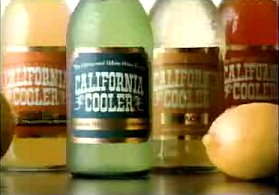
California Coolers (1981)
Bud Light
Heineken
Amstel Light


Soda Museum
Urban Legends & New Coke
Wine Coolers


In 1985, Coca-Cola changed the formula of their soft drink and named it New Coke. This didn't go over very well with the public, which prompted them to "bring back" their original formula and call it Coca-Cola Classic. Publicity stunt or genuine marketing blunder? The jury is still out...


========================================
========================================
========================================
========================================

----
health & beauty


makeup
colored mascara
Lip Smackers

shampoo
Perma-Soft
Flex
Vidal Sassoon
JoJoBa


hair care
mousse
gel
Jeri Curl
Sun-In
crimping irons
scrunchies
Aqua-Net hairspray

fragrance
Impulse Body Spray
Debbie Gibson's Electric Youth
Gloria Vanderbilt perfume
Polo for men
Babe by Faberge


health & hygiene
Aquafresh toothpaste
Sudafed
Comtrex
toothpaste pump dispensers (1984)
Coast deodorant soap
Liquid Dial antibacterial soap (1989)
Softsoap liquid soap (1987)


transportation


DeLorean
BMW
Toyota Tercel
Dodge Caravan
Ford Taurus


The DeLorean Motor Company


========================================
========================================


other products

cute novelty telephones:
-------*Garfield
-------*Pac-Man
-------*Mickey Mouse
Snuggle Fabric Softener
The Clapper
Kodak Disc Camera
Stick-Up air fresheners
EraserMate erasable pens (1981)
Bounce fabric softener sheets
Snausages dog treats
musical greeting cards (1983)


----


========================================
========================================
========================================
========================================


popular Christmas gifts
in the 1980s
(some typical prices, too!)

*microwave oven ($227.00)
*exercise bike
*Care Bear ($13.99)
*Talking Pee Wee Herman doll
*Space Invaders game cartridge ($24.88)
*Cabbage Patch Kids
*Kodak Disc Camera
*Smurfs
*He-Man Castle Greyskull playset ($23.99)
*Garfield telephone ($44.70)
*VCR ($1,395 down to $299)
*Nintendo Gameboy
*Transformers
*Trivial Pursuit
*BMX bike
*Rubik's Cube
*Sony Walkman

===========================================================================
===========================================================================
===========================================================================
===========================================================================


Advertising


-------

-------

animated mascots------
hall of fame------


Noid (Domino's Pizza)
7-UP Spot
Mac Tonight (McDonalds)
California Raisin
Snuggle Bear (Snuggle Fabric Softener)


classic ads


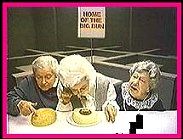
Where's the beef?
This 1984 commercial for Wendy's
hamburgers is one of the
most popular TV spots ever.
It was responsible for a 31 percent
increase in Wendy's sales


Miller Lite: Less Filling! Tastes Great!


Bud Light spokesdog
Spuds McKenzie, the
original "party animal!"


At the mall, the
Pepsi Challenge invited you to
try both Coke and Pepsi in a
blind taste test. Which one did
you choose?


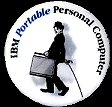
IBM used Charlie Chaplin's
"little tramp" character to
sell their PCs


The Mr. Pibb Girl was a composite
photograph incorporating the features
of several different celebrities.
The campaign was scrapped when
protesters pointed out that no Asians or
African Americans had been included


my YouTube playlist


1980s Commercials
audio/video sites
Retro Junk Commercials
Computer Commercials


links
Remember These 80s Commercials?
Spuds McKenzie
Clara Peller
The Commodore Museum
Jason's Hush Puppies Scrapbook


return to:
Activities & Trends


return to the 1980s main page